
On Jake's 32nd Birthday

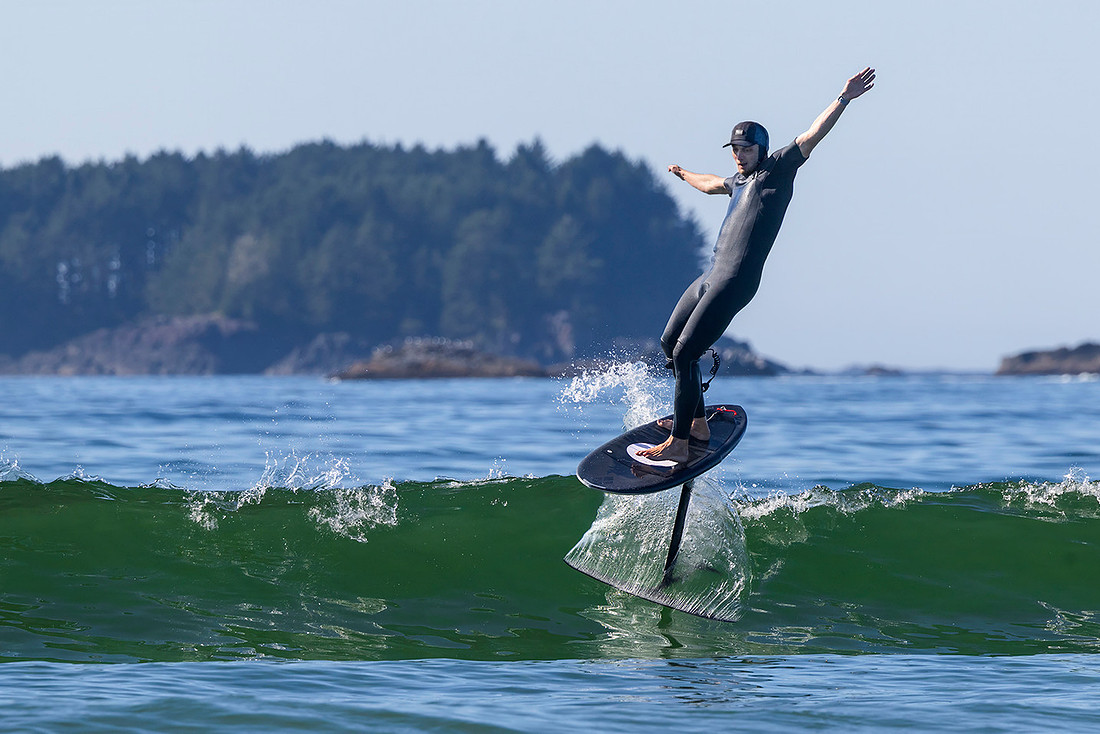

For Jake on his 32nd Birthday
I taught Jake how to swim when he was three years old.
With a little toy fish and a plastic, yellow boat clutched in his small hands, he spent that summer eager for every visit to our apartment’s pool in Jackson, Mississippi. When he first learned, he bypassed swimming on top of the water altogether, choosing instead to move entirely underwater. He kept both arms pressed firmly against his sides, relying entirely on his legs to kick and propel himself. It was unusual, but he was comfortable, confident, and totally in his element.
By the summer he was six, Jake and his sister, Savannah, were taking swimming lessons at the Dellinger Park pool in Cartersville, Georgia. By then, they were both excellent swimmers. On the last day of their class, their teacher gathered all ten students at the deep end of the pool.
The challenge was simple: everyone would tread water, and whoever lasted the longest would win a prize.
Within thirty seconds, most of the children had given up and swam to the side to hold on. Soon there were only two kids left in the deep end.
Jake and Savannah.
Five minutes passed. Then ten. Neither one would quit.
They looked as though they could have stayed out there all day, smiling and laughing while still treading water. Eventually, time ran out, forcing the teacher to intervene, stop them simultaneously, and award them both a prize. That was the only way to make them surrender.
I saw that same determination years later when Jake was on the Cartersville High School swim team. By then he stood six feet, one inch tall with a broad upper body and a wide wingspan. He possessed the ideal build for the butterfly. Though he could swim all four strokes, he was often assigned to the butterfly events because he was good at them, and few others had the desire to tackle such a challenging stroke.
At his final swim meet as a high school senior, he was in heat 1 of the 100 yard Butterfly. I stood at the end of his lane, trying to photograph him as he approached. I wanted the shot of him rising out of the water, arms extended wide in the distinctive rhythm of the butterfly. It was not easy.
I was still relatively new to photography back then, shooting with a Nikon D90 rather than the Canon mirrorless I use today. The subject-tracking technology I rely on now did not even exist then.
As Jake came toward me, his head went up, then down, and water splashed everywhere. Each time I thought I had the focus locked, another splash interfered.
But on his second-to-last stroke before reaching the wall, I got it!
His arms were spread wide. His body was rising from the water. It was his last swim team event of high school, and I had captured it!
My Jake.
He has always had that kind of drive - a trait both of my children share when tackling new sports. They took to skiing, snowboarding, and backcountry skiing with enthusiasm. Jake even ran cross-country in high school, despite being a tall, broad-shouldered swimmer who was not built for distance running. He has always been determined when something captures his interest.
The important part, I have learned, is that it has to be something he cares about. Once it is, he goes all in.
I saw that familiar quality again recently when Bill and I drove across the country to visit Jake in Bellingham, Washington. From there, we traveled together by ferry and camper van to the wild edge of Vancouver Island in Tofino. That was where Jake introduced us to his newest passion.
Foiling.
I had never even heard of “foiling.” Even after Jake explained it and demonstrated, I wasn't sure I understood what I was seeing.
A foil is a hydrofoil attached beneath a board. As the board gains speed, the underwater wing generates lift, raising the board above the ocean's surface. The rider appears to skim over the waves, several feet above the water, supported by a narrow mast with the wing hidden beneath the swells. Unlike ordinary surfing, foiling allows a rider to glide beyond the breaking part of a wave and, with enough skill, connect with another swell without getting off the board.
Jake was eager to get out on the water the moment we reached Tofino on Wednesday afternoon. Despite the cool weather, he zipped up his wetsuit and headed straight for the surf even though daylight was fading fast.
Watching from the shoreline, I squinted toward the wild Pacific, trying to figure out the mechanics of what I was seeing.
There were hundreds of surfers scattered across Cox Bay, appearing from a distance as little more than heads rising and falling between the swells, but I could recognize Jake without hesitation. Partly because of his physical posture on the board: while waiting for a swell, he lies prone with his knees bent and feet lifted behind him. I quickly learned to watch for that distinct silhouette against the blue-gray water.
But it was more than his technique that helped find him. It was what I call ‘mother vision.’ After thirty-one years of watching him, I could pick him out in a crowd, even one spread across the ocean.
And over the next five days I watched. Jake spent every free second he had in the ocean waiting for just the right swell to arrive.
And when it did, he would paddle hard to get ahead of it, pop up onto the board, and begin to glide. He was not simply riding a single wave all the way in to the beach. He would turn, pump sideways, work his way back toward the open water, and connect to another wave, and then another.
By the end of our stay, he could stay upright until he decided he was ready to stop. He told me that even when he was exhausted, he didn't want to quit.
"A bad run makes me want to try again and do better," he said. "A good run makes me want to try again and see if I can do better still."
I understood that completely. I understood it as his mother, and I understood it as a photographer.
One afternoon, when the water at Cox Bay was flat, Jake checked an app and discovered that conditions were better ten miles south at Long Beach, near Incinerator Rock. He packed up his equipment and headed there.
I packed up my camera and went with him.
Just as I had followed him to swimming pools, watched him compete in the butterfly, and stood on the sidelines of countless other pursuits, I wanted to be there for this too.
Jake is usually camera-shy but this time, he was interested in what I was capturing and evaluating his own form. I was using my Canon R5 Mark II with a 100–500mm lens and a 1.4x teleconverter. The subject tracking technology made it much easier to follow his runs far out in the Pacific. In good light, I could capture him clearly. Under heavy clouds, the images grew noisier. Still, I kept photographing.
He would finish a run, fall, or step off the board to rest, and then head back out.
I would remain on the shoreline, my feet cold, my shoulder beginning to ache, waiting for his next attempt.
Maybe the next run would be better.
Maybe he would make a beautiful turn with the lighthouse behind him.
Maybe the foil would break the surface at exactly the right moment, visible through a glassy aqua wave.
Maybe I would capture something I had never seen before.
I realized that Jake and I were doing much the same thing.
He was returning to the water in search of the next perfect run.
I was raising my camera in search of the next perfect photograph.
Neither of us wanted to quit.
On Sunday morning, before we left, he hurried down to the beach when it was barely light to get one more hour on the water.
And I went too, camera in hand. And I watched him just as I had watched him in the pool in Jackson, tread water in Cartersville, and rise out of the waves during his final high school butterfly.
Though the setting had changed and the little boy was now a grown man living thousands of miles away, something very familiar remained. He still finds something that interests him, gives it his full attention, and keeps going back for more.
And I still find myself watching.
I miss him more than I can easily explain: his very unique brand of humor, his curiosity, his goodness, and the simple pleasure of spending time with my son. But I am grateful that he has built a life that suits him. Bellingham gives him mountains, snow, rivers and ocean. He has found a place where his passions have room to grow. I would rather have him living a life he loves, even far away, than living close by and feeling confined.
The photos will eventually be stored safely on my server under ‘Tofino, September 2026.’ Some will be grainy and noisy from the low light, but that doesn't matter. I love them not for their technical perfection, but for what they hold.
They hold a three-year-old boy kicking underwater in Mississippi.
A six-year-old who refused to stop treading water.
A teenager rising through the spray of his final butterfly.
And now my grown son, out in the Pacific, pursuing the next wave.
So I stand on the shore and watch. And when that perfect wave comes along and Jake pops up onto his foil, I lift my camera again.
I'm still his mother, after all.
And his number-one fan.