
Lucky Lottery Numbers
This is a piece that I wrote for inclusion in my sister's book, Project Keepsake.

LUCKY LOTTERY NUMBERS
I pulled my navy blue Ford Explorer into the garage and quickly shut the overhead door to seal out the sweltering heat. It was August in Southern Illinois. The heat and humidity rivaled anything I had ever experienced in my seventeen years growing up in Middle Georgia.
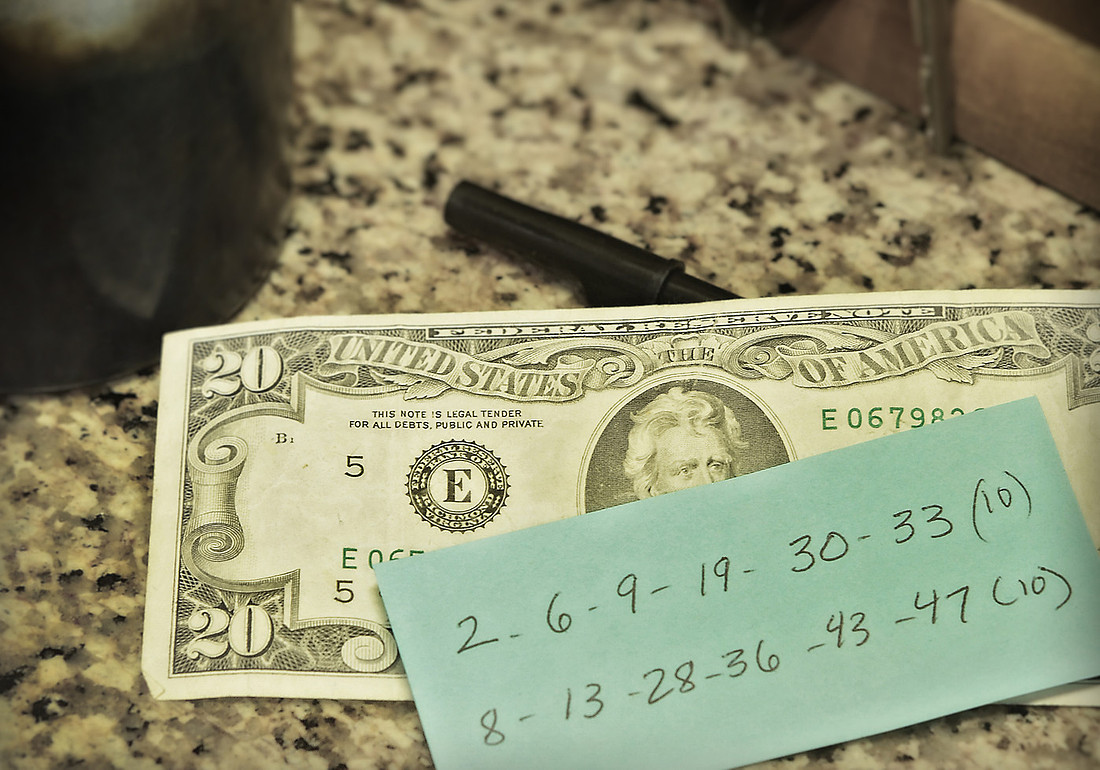
I had just escorted my parents to the airport in St. Louis and driven the twenty-five miles back to my home in O’Fallon, Illinois. I stepped inside my kitchen, draped my purse over the back of a chair, and reached across the counter to hang my keys on the hook—that’s when I noticed the single scrap of pale blue paper. I studied it. It had been torn hastily from my notepad, and left deliberately on the center of my desk with a twenty dollar bill. Written on the piece of paper were two rows of numbers:
2 - 6 – 9 – 19 – 30 – 33 ($10)
8 – 13 – 28 – 36 – 43 – 47 ($10)
I recognized my father’s rushed handwriting and instantly understood what he had secretly left there for me to find upon my return.
I glanced at the clock and preformed some quick calculations in my head. My parents had surely touched down safely at the Atlanta airport by now and been greeted at their gate by my sister. Amber was responsible for helping them navigate the airport labyrinth and for driving them back to their home in Warner Robins, Georgia.
Standing alone in my kitchen, I smiled at the idea of playing Daddy’s lottery numbers for him. It was 1992 and at that time Georgia did not have a state lottery, but Illinois did. The possibility, albeit remote, of winning a $10 million jackpot intrigued my father. He had always been a bit of a gambling man—hustling unsuspecting men at local pool and billiard halls and taking his friends’ petty cash in late night games of poker. Playing the lottery was right up his alley, and the numbers written on that scrap of paper represented the extravagant dreams of a fifty-eight-year-old man.
I examined the digits closely. While the second row of numbers appeared to be completely random, the first row of numbers was familiar to me—each of those numbers represented a birth date of a member of our family. A sudden revelation ensued: my dad’s lucky numbers were our birthdays.
My older brother, Andy, was born on December 2. My younger sister, Amber, was born on August 6. The numbers 9, 19 and 30 are the respective birth dates of my mother, my father and me. The last number on that line, 33, represents the year in which my father was born.
My parents were traditional, middle class people who had been born and raised during the Great Depression in rural south Georgia. Both Mom and Dad were brought up in families of meager financial means, but both were raised in large, loving families rich in southern values, work ethics, and pride.
My parents said their vows in early December of 1956, and together, they raised three children. Like our parents, my brother, sister and I did not have a lavish upbringing, but we did enjoy the devotion of two loving parents who worked hard and made sacrifices so we could live comfortably. My dad worked two jobs to support our family and my mom worked from home as a bookkeeper. This allowed her to keep us properly supervised, well fed and safely chauffeured to our many extracurricular commitments.
We lived in a subdivision in a modest three bedroom, two bathroom house where we spent our summers riding bikes with neighborhood friends, picking wild plums and blackberries along a dirt road behind our house, and playing summer sports at a park just down the street. Although we never took elaborate vacations during those summer months, I never felt like I was missing out on anything. From time to time, my dad would contemplate driving across country to visit the the Grand Canyon or the California coast. His fondest desire was to one day travel to the icy, foreign landscape of Alaska, but the reality of raising three kids, working two jobs and eventually paying for all three of us to attend Georgia Tech prevented them from traveling to far away places.
The summer of 1992 would be different. My dad had recently retired from Robins Air Force Base where he worked for thirty-four years as a supervisor on the flight line in the Air Freight Terminal. All three of us kids had, by 1992, graduated from college and flown out of our parents’ nest. For the first time in their lives my parents were now free to pursue some of their dreams that had been long postponed. I had been living in the Midwest for the preceding three years and had not made as many trips home to visit my family as I should have. That particular summer, airfares from Atlanta to St. Louis were unusually low, making it cheaper and quicker to fly than to drive. So, with the encouragement of my sister, my parents boarded an airplane bound for St. Louis to visit my husband and me.
During their five day stay with us, we did the things that most tourists visiting the area would do: we saw the famous St. Louis Arch and marveled at the size and strength of the Mighty Mississippi—both sights my parents had seen only in photographs. I took them on a driving tour of Scott Air Force Base where I worked as a negotiator for the Department of Defense. My mother is an avid gardener, and on their last full day there, we toured the Botanical Gardens in St. Louis. My dad was not feeling well that day, and instead of braving the near 100 degree temperatures that afternoon, he stayed at our home and watched a baseball game on television in air conditioned comfort.
On their last night with us, we enjoyed a quiet dinner-and-a-movie night at home. The first movie we watched was My Girl, and I remember being somewhat uneasy about its somber storyline. Thankfully, the second film we viewed was a comedy, and it quickly lightened our moods. My dad laughed so hard that tears ran down his cheeks as he watched Macaulay Culkin’s character abuse the two would-be thieves in the movie Home Alone. It was a very happy ending to their visit with us.
The next morning, Mom and Dad hastily packed, shoved their bags into my car, and we left so that they could catch an early flight. I walked them to their gate and waited until they were called to board. I hugged them both goodbye and watched as my parents disappeared down the jetway. And then I boarded my own vehicle, and made the forty-five minute drive back to O’Fallon pleased that I was able to enjoy some quality time with my parents and content in knowing I would see them again in three short months when I visited at the end of November. Little did I know that I would go home much sooner than Thanksgiving.
Two weeks later at 2:30 a.m., a phone call woke me from my sleep. I answered the call and heard my brother’s inconsolable voice struggle to push out the words, “Daddy died.”
My daddy was gone. He had passed away unexpectedly that night as I slept comfortably 700 miles away. Literally, in a moment, my entire life changed in a way that could never be corrected.
The next two weeks blurred together—details, flowers, caskets, guests, music, peace lilies, phone calls, sympathy cards. To this day I remember the extreme heartbreak as the casket was closed and my mother, brother, sister and I stood crying in the hallway of the funeral home. Our family suddenly felt so small.
When I returned to my home to O’Fallon following my father’s funeral, I saw the blue scrap of paper containing his lucky numbers and the twenty dollar bill exactly where he had placed it. Just weeks earlier, I had been amused by the tiny piece of paper that represented my father’s most extravagant dreams. But time had changed the way I felt about the numbers. As I stood alone in my kitchen looking at the rows of digits, I felt a heavy sadness and regret that those numbers had no chance of ever bringing joy into my father’s life, or into mine. The biggest jackpot I could ever win would not bring my daddy back—all the money in the world couldn’t change that. Money can’t buy happiness.
With sadness I took the piece of paper and its accompanying twenty dollar bill and put them inside the top drawer of my nightstand along with the bifold parchment program that had been handed out to guests at my dad’s funeral.
In a superficial way my life returned to normal, but in reality, there was always an underlying emptiness. Then almost exactly a year after my father’s death, my daughter was born—blue-eyed, just like my dad. Another year passed and my blue-eyed baby boy arrived. As they grew up, I often thought about how my dad would have loved them both so much. He would have surely been delighted by Savannah’s beautiful spirit, and he would have been amused by little Jake’s determination and frequent obstinance.
Years passed. I was so busy raising my kids that the sense of loss I experienced when my father died somewhat dissipated, and I completely forgot about the lottery numbers I had stashed in my nightstand for safekeeping.
But one day, my mind drifted back to them, and I had an irrepressible desire to find the paper and hold it in my hand. We had moved eight times in eight years, and with each move, we had packed, shipped, and unpacked the contents of our home. As I rushed through the house toward my bedroom, my anxiety swelled. I felt sick. I feared that the paper bearing my father’s lucky lottery numbers would not be in the drawer—that it would be lost forever.
I fumbled through the contents like I mad woman. The funeral program had migrated to the back of the drawer. When I lifted it, I caught a glimpse of Andrew Jackson’s crumpled face. And then I saw the numbers—safe and sound.
Today, that simple piece of paper is one of my most cherished keepsakes. It connects me to the things I always want to remember about my dad—that while he was a practical and hardworking man, he possessed a playful and imaginative quality, as well; that he was very satisfied with everything he had and everything he was; that he loved us all; and that he was proud of each of us.
I pay almost no attention to the lottery and have never played his numbers, even though I sometimes think I should. To me, his numbers are not lucky because I could potentially play them and win a big monetary jackpot. They are lucky to me because they represent the last thing my father gave to me—something that was in his very own handwriting; something that came from his wallet; something special to him that he secretly left for only me.
I occasionally look at the numbers and the twenty dollar bill and imagine my dad standing in my kitchen. He jots the numbers down from heart then rips the paper from the notepad. He reaches into his wallet and pulls out a twenty. He grins. He dreams. He walks out of my house.
The Old Front Porch
This is a story I wrote while attending one of my sister's writing workshops in the summer of 2013.
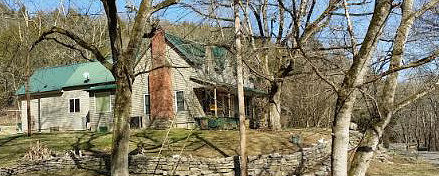
My mind often drifts back in time to the shady sanctuary of my Grandmother Lanier's front porch. It was a welcome refuge for me during the late Sixties and Seventies when I was a freckled-faced, halter-top-wearing little girl.
As children my brother Andy, sister Amber, cousin Stewart and I roamed my Grandparents’ farm on countless hot summer mornings and although we did not have cell phones, iPads, computers or video games, there was always an unlimited supply of interesting things to do and see. Using cane poles and earthworms dug from the moist soil beneath bricks and stones, we plucked hungry bream from the small farm pond that sat quietly beyond my Grandmother’s bell pepper garden. We splashed in a small branch that flowed near the entrance to the farm and we devoured plump blackberries that grew wild along the fence lines. We routinely checked the nests inside the chicken coop for fresh eggs and using our bare feet as “forms” we built “frog houses” in the sandy soil near the mailbox. We took turns climbing into the seat of my Papa Lanier’s 1949 rusty red Farmall tractor and pretended to drive it up and down along rows of cotton. The four of us played largely unsupervised for many long happy hours, but by midday, exhausted and hungry, we retreated to the inviting shade of my Grandparents’ front porch.
The porch adorned the front of a simple yet gracious two bedroom wood frame farmhouse which was built in 1909 by my Great Grandfather Thomas Lincoln Lanier and his wife Deborah Daughtry Lanier before being passed along to my Grandmother and Papa shortly after they married in 1922. The porch stood watch over the 73 acre farm which is located 15 miles north of Metter, Georgia on a red dirt road near the intersection of Georgia Highway 121 and Rosemary Church Road.
The porch was, roughly 35 feet long, 10 feet wide and a mere 3 feet off the ground. There were no rails along the sides of the porch, but long, rectangular flower pots spilling with fragrant and colorful petunias lined the edges. Thick woody wisteria vines, dripping with pale purple blossoms and alive with humming birds and bees, wound their way up the four lattice pillars that supported the shiny tin roof. Two weathered wooden rocking chairs filled one end of the porch while a wooden swing supported by rusty chains occupied the opposite end.
After our morning adventures on the farm the four of us would ascend the three concrete steps that lead from the patch of thick St. Augustine grass and onto the green painted wooden deck of the front porch. As if by clockwork my Grandmother Maggie and Aunt Colleen would emerge from the screen door – the door snapping back with a resounding ‘thwack” to keep the flies out of the house. Adorned in simple cotton house dresses and lace trimmed aprons, Grandmother and Colleen served us “dinner,” as the midday meal was called, usually consisting of cold biscuits and thick cut bacon left over from breakfast, okra, peas, corn and tomatoes all fresh from the garden, fried chicken and of course plenty of sweet iced tea. Seated along the sides of the porch with our dirty bare feet dangling over the edge, we devoured our lunch without regard for the calorie count of the sweet tea, the fat content of the bacon or the number of carbs contained in the biscuits. Yes these were carefree times.
Lethargic from eating second and even third helpings of delicious southern fare we remained on the porch until we could regain enough energy to continue the important daily tasks that remained. Andy and Stewart would lay back with their feet up on the rockers and discuss issues of vital importance such as how to build a more effective rabbit trap or speculate on the size of “Old’ Moe”, the legendary monster sized bass that lived in the farm pond and shrewdly evaded capture year after year. My sister and I sat on the swing as it gently swayed back and forth in the negligible afternoon breeze. It was not uncommon for my grandparents’ old dog Whitey to timidly approach us as we lounged lazily in the afternoon warmth. Whitey was a “mut” no heavier than 35 pounds. As his name suggested he was predominately white with one tan spot about the size of a dinner plate on his right side. Whitey was bashful most likely because my Grandmother Lanier chased him off her porch daily with a straw broom. But with Grandmother safely out of sight in the kitchen on the back of the house, we would quietly encourage Whitey to venture onto the porch. He was scared and although he was reluctant to get close to us we could tell that he wanted us to pet him. My sister Amber would say to me, “he likes to be petted on his spot.” Never questioning the authenticity of the apparent mental telepathy she shared with Whitey, I dutifully obliged and stuck out my foot as far as it could reach in the direction of the reticent pup. To our delight, Whitey would cautiously sidle up even closer to us and allowing our outstretched toes to rub his spot.
Mealtime in the comfort of the shady porch was a nice break but we didn’t dwell there very long. The afternoons gave us plenty of daylight to explore the inside of the barn, climb the huge crepe myrtle trees in the front yard, sneak a peek down into the dark scary depths of the well and pick bouquets of colorful Old Maids from beside the corn crib. So, like paratroopers exiting a C-130, we would leap from the end of the porch, one by one, each landing in the pile of soft, powdery soil that was just below an ancient pecan tree.
I don’t know why, but the days lingered longer and time seemed to move more slowly perched on a swing or a rocker on that old front porch. Today, as I spend time on my own porch overlooking the woods behind my house, I often think about the old Lanier farmhouse. If I close my eyes, I can see the mighty pecan trees that surrounded the structure, I can smell the honeysuckle blossoms blooming nearby, I can hear the lonely cry of a whippoorwill at dusk, and wonder – where has all the time gone.
I have not seen Stewart in over a decade. My Grandmother Lanier died in 1990. My Aunt Colleen died almost two years ago. I miss them all. But that porch still stands and waits for me to come and rest in its shade and remember…..
Traditional Finnish Sauna
This is a lengthy but very entertaining piece that Savannah wrote for her blog last summer. I LOVE it and just had to share. An extensive blog about her world travels can be found at www.savannahandersen.com.
Helsinki, Finland
Although it was close to four in the morning as I hustled toward Helsingborg Centralstation, pink, wispy clouds were already painting a water color picture across sunlight summer sky. I folded my arms tightly, snuggling even tighter into my cozy sweater cocoon. It was hard to believe that when I arrived in Helsinki, Finland the latitude would be even higher, yielding an even earlier dawn and even more of a daybreak chill.
Once inside the transit hub, several other luggage-bearing travellers and I climbed aboard the Scandlines ferry that would carry us across the Oresund Sound from Hesingborg, Sweden, to Helsingor, Denmark in just twenty minutes. It was so early that the direct trains to the airport had not yet started running. After climbing the sticky stairs to passenger deck, I situated myself at bow of the boat next to a large window. Never before had I travelled on a ferry, and I watched curiously as men in neon yellow vests ushered car after car into perfect alignment just below my perch.
The entire bulky vessel began to shake like a 1980’s weight loss machine. Much to my surprise, the anchor was drawn, the agitation slackened, and in a matter of moments the mammoth boat began to glide effortlessly through the water like a swan on a glass lake.
It was not long before I had reached Kastrup Airport in Copenhagen, where my flight would soon depart. As I heaved my backpack up to my shoulder and headed toward security, I reached inside my purse to prepare my passport and boarding documents. My fingers groped inside the caramel leather interior, but they failed to grasp the object they sought. I stopped walking and gasped, eyes wide. My passport was resting inside the closet inside my apartment, an hour and a half away from where I stood.
I hadn’t been asked to provide documentation during any of my inter-country excursions since I had arrived from the United States, but I always carried my passport when travelling just in case any problems did arise. However, I had a knot in my stomach warning me that soon my good friend Irony was likely to play one of her satirical pranks.
Stepping toward the security checkpoint, I tossed my jacket, my iPad, and my belt into a bin, doing my very best to look, Scandanavian, inconspicuous, and well-travelled. The man directly in front of me failed to feign such a convincing act. With his light-wash jeans, bright white sneakers and baseball cap, he loudly inquired “Can I leave my shoes on?” After raising an eyebrow and giving him the once over, a nearby agent told him he could while shooting a telling glance to his partner on the other side of the metal detector.
Although the metal detector did not chime, the second agent extended his hand toward the traveller, commanding “Passport please.” As the traveller struggled to release the booklet from his pocket and hand it to the guard, I saw a golden eagle emblem flash across the navy blue background.
It was now my turn to attempt the passage. I glanced toward the first security guard, shaking my head a little and giving him a “Oh, those Americans” smile. He returned the sentiment and lifted his hand, waving me through. I held my breath as I passed through the gateway. I was safe! I snagged my belongings and dodged the man who had been in front of me, who now watched as his bag was searched. My only concern was that I wouldn’t have the same luck on my return flight from Finland…
Just two hours later, after making my way by foot, ferry, train and plane, I boarded bus 601 just outside the Helsinki Airport. As the vehicle hummed into the city, I contemplated the attractions I planned to visit during my two day stay. I intended to check into my hotel, orienting myself to the area, and see the main sights like Senate Square and the Helsinki University Botanical Gardens. Then, I would venture to the more unique attractions like the photography museum and the local markets morning before my return flight. I had also carved out several hours in the early evening to experience the most time-honored Finnish tradition: the sauna.
The reason that I enjoy travelling is because it provides the best opportunity to experience new people, new cultures, and entire new worlds first hand. It helps you learn and grow, almost through osmosis at times. When exploring somewhere new, I always find myself learning in unintended, unplanned ways. Since I appreciate personal growth as one of the main benefits of travelling, I also feel that if my mind is not open to accepting new experiences, this growth cannot occur, and the main value travelling provides is lost.
That is why after reading the etiquette and traditions of the Finnish sauna I was daunted, but not deterred. The idea of a sauna in and of itself did not intimidate me. As a Georgia girl, the thought of a warm wooden room, filled with the aroma of aged cedar walls was actually very appealing since the Scandinavian summer climate is comparable to the coolest of Atlanta’s fall days. As a true Georgia Tech student, I had done my pre-trip reading. And it was the customs of Finnish sauna that evoked my concern.
Throughout the country as a whole, there are more saunas than households in Finland. Many of them are private, within individual residences or hotels, but many of them are public as well. In ways, the Finnish sauna is similar to a day spa in the United States. The saunas are in bathhouses separated by gender, usually with females on the second floor and men on the first. Finns believe strongly in the health benefits saunas provide.
In a nutshell, it is customary to enter the sauna, receive a towel and a sitting mat, pay for a “scrub,” troop to the appropriate floor, strip to your birthday suit, and enter the sweltering wooden room where to bake for hours at a time whilst intermittently smacking yourself with branches from a birch tree. Only after sweltering for the better part of an hour will “the scrubber” arrive to provide the spa’s most popular service. Even after learning of these foreign customs, I was determined that I would not leave Finland without attempting an adventure to the sauna.
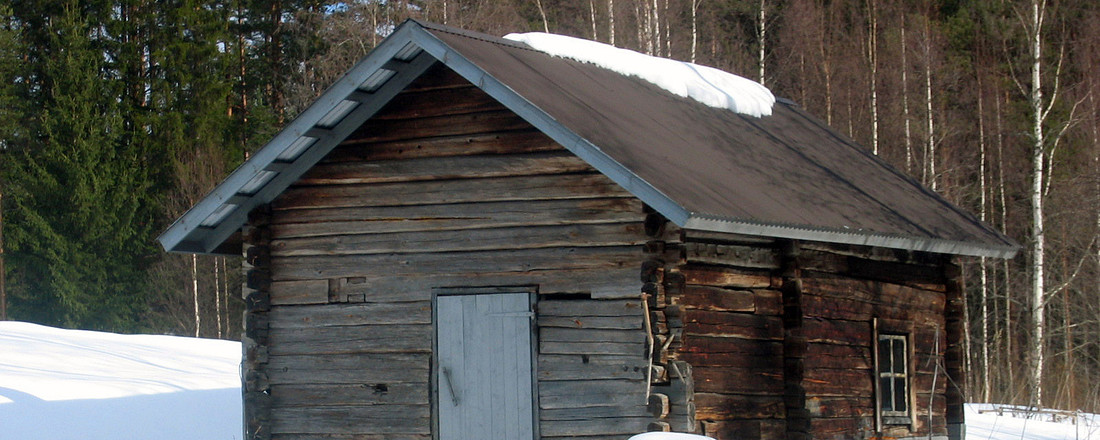
Later that day, as I marched up the hill toward the red neon sign like a soldier heading to battle, I felt strangely invigorated! The thought of experiencing something so new and unique left me feeling brave and excited, not awkward and intimidated like I had expected. But, my confidence began to melt like butter on a hot skillet when I cleared a tree that had been obstructing my view. There I saw for the first time nearly fifteen men sitting outside the sauna. Vapours swirled through the air as the heat of their bodies, bare apart from the short towels swaddling their legs and waist, made contact with the crisp air.
I looked myself over. I was clad in my Miss Me blue jeans, Alpha Chi Omega sorority t-shirt, Patagonia jacket, and Nike tennis shoes with neon pink laces. With my backpack and perpetually curious demeanour, I’m sure I stood out like a fox in a hen house. Or in this case… the only American female in the sauna house.
Although my feet faltered for just a moment, it wasn’t long before I had regained my composure and plastered a goofy smile to my face, deciding to fully embrace my alien appearance. I even stopped and took a picture of the sign that clung to the side of the crumbling brick building. After some rough communication with the woman at the front desk, I had managed to secure a day pass to the second floor women’s sauna, a clean towel and mat, and a traditional “scrub,” all for about twenty euros.
Proudly, I clomped up the stairs and around a corner, throwing my backpack and every stitch of my clothing into a locker. I stood, stark naked in the neat little locker room, eyeing the four doors that lined the walls and wondering which I should enter. After a few minutes of observation, I opted for the door on my far right. I had seen several other women, as bare as me, traverse the threshold and I thought that it must be some type of ante-chamber to the sauna.
I tiptoed into the tile room lined with towel hooks, showers and wooden benches. Although I was weary of calling any attention to myself, I had decided it would be acceptable for me to don the tattered towel en route to the sauna. I knew that Finns actually found it offensive if a person refused to drop their drawers while in the bathhouse, and I didn’t want to be hurled back outside in front of the hoard of half-clothed men for committing such a faux pa.
In the corner of the room a rickety wooden door hung slightly askew on its rusty hinges – I was certain I had finally come to the right place. As I approached the sauna I was again consumed with elation and a sense of accomplishment that can only come from roaming unaccompanied and unclothed through a foreign land. As I burst into the sauna with a new-found sense of freedom, I cast my towel to the side with wild abandon, embracing true, Finnish tradition!
My satisfied smile and starry-eyed gaze vanished the moment I let the door slam behind me. As I scanned the figures scattered across the hot wooden benches, I realized that not a single woman, besides myself, had decided to adopt conventional sauna customs. I just stood for a moment with the crowd taking me in as they might assess an elephant in a circus ring. It was then that I realized that these girl, all ten of them, were speaking perfect American English.
Irony had decided to play her trick after all. After three weeks at work, during which I had received absolutely NO interaction with anyone from my home country or from my same birth decade, I had come half way across the world to a public sauna tucked away in the back alley of Helsinki, Finland only to find nearly a dozen other college aged American girls.
But, the die had been cast and there was no turning back now. I chuckled and, with a shrug, I flipped the towel over my shoulder and sat down amongst them. Despite the awkward environment, I really enjoyed the company of the clan. Each girl hailed from a different college back in the States, but they had all joined together for a furniture and interior design study abroad trip. Time passed, with many of the girls exiting the sauna every five minutes or so to retrieve cold buckets of water or to catch a breath of cool air. Just when I had become comfortable with the whole situation, “the scrubber” came.
The concept of a scrubber is one I had never before encountered. The large, pink-cheeked woman ambled my way, straining to tie an apron about her waist. In very limited English, she told me to come with her, and I obliged. Nervously, I hung up my towel and glanced toward her, where she motioned for me to lie down on a waist high bed, draped in a large piece of plastic.
“On my back or on my chest?” I asked, already unsure of myself.
“Whatever pleases you!” She replied.
The plastic tarp was light pink and printed with drawings of steaming cups of coffee dancing across its slick surface. Occasionally the words “coffee,” “caffe,” and “mocha” punctuated the artful beverage display. Somehow I found this décor to be the oddest part of the entire situation. I decide that resting on my stomach would be the most comfortable way to begin the scrub.
I felt like the catch-of-the-day as the big-boned Finnish woman hosed me down with warm water, grabbed a loofah, and proceeded to, well… scrub me. She combed every inch of me from the hairs on my head to between the toes on my feet. She did it this twice, then she flipped me over, and she scrubbed me again. Still feeling like a flounder fillet, I looked to her for assurance when I thought the scrubbing had concluded. She nodded and I slipped of the table, uncomfortably thanking her and snagging my towel before retreating to the sauna once more.
Although the situation was strange, I actually felt wonderful. And I think I would have enjoyed myself even more if I hadn’t been such an inexperienced Finnish sauna goer. During my scrub, all of the American girls had trickled out from the bathhouse and I remained in the warm room with two Finnish woman, who were relaxing the “proper way.” When I was certain I would shrivel like a raisin if I stayed much longer, I showered off, dressed, and triumphantly headed to explore the rest of Helsinki, refreshed and relaxed.
Chocolate Milk
This is an essay Jake wrote in 2012 when applying to Wake Forest University. The essay is in response to their prompt, "Wake Forest School believes that the quality of an educational experience depends in part on the differences of backgrounds, experiences, and perspectives of the students who comprise each class. How will you contribute to the diversity at Wake Forest? "It is truly one of the favorite college essays I have ever read and it came from Jake's heart. He was accepted at Wake Forest, but chose instead to attend Georgia Tech!

Chocolate Milk
I’ve always asked myself why anyone would drink milk without putting chocolate in it. Have you had chocolate milk? It’s delicious, and it does everything that milk has ever done and more. So, it’s only fitting that my story starts with chocolate milk - or the spilling of my carton of chocolate milk, to be exact. The splatter wasn’t even big enough for me to care about, but the fourth grade lunch monitor cared. As punishment for my crime, she sentenced me to a hard thirty minutes in silent lunch with no chance for bail. While there, I seethed at the lunch monitor for the grossly unfair way in which she treated me. I certainly didn’t spill it on purpose. I was going to clean it up. Why punish me? This seemingly inconsequential thirty minutes of my life escalated into one of the more important revelations of my elementary school years. It was an event that shaped a belief I still carry with me today: that all people should be treated fairly and with respect.
Fast-forward a few years: I was in the glorious break from school that we all know as summer. But it wasn’t just any summer - my parents had deemed me mature enough to spend a week away from their guiding presence. I was attending Camp Cherokee, a Presbyterian summer camp where campers from all backgrounds enjoyed a week in the woods canoeing, crafting, playing various field games, and having an all-around great time.
Most kids relished their week in the woods, but I wasn't really having that good of a time. I was a nice enough sixth grader but I didn’t quite fit in. I attended St. Francis Catholic Church of Cartersville, and everyone else at the camp was a member of the Presbyterian Church across the way. I now realize that this isn’t really a big deal, but back then, our religious affiliations seemed to be a HUGE deal to the other kids. Although both are Christian faiths and both have more or less the same beliefs and values, the other campers seemed to judge me based on this minor difference. They did not include me in games of foursquare, they did not want to share a canoe with me, and did not allow me to sit at their table at lunchtime. Alas, I was forced to drink my chocolate milk alone.
But one of the staff members at the camp made that week bearable for me. Karl was the counselor in charge of my cabin during my time at Camp Cherokee, and when I felt lonely or left out, Karl came to my rescue - always making sure that the other kids involved me. To some, it may seem like a small, insignificant gesture that Karl made sure that the others included me in their activities, but to me, his kindness reinforced the chocolate milk lesson: that no matter what, everyone deserves to be treated fairly and with respect. And after pondering Karl's actions that week, I expanded the lesson to: everyone should be included and everyone should have a chance to participate.
Fast forward one more time to the summer of 2012. I am now a full time summer counselor at Camp Cherokee. Karl has moved on, and I now fill his shoes and work with the young campers to make them feel welcome and entertained.
I went into the summer with one conviction- one solitary goal. I would work tirelessly to make sure that no one at the summer camp was excluded or treated unfairly because they were different. The test of my resolve presented itself about halfway through the summer when Marc arrived at Camp Cherokee. Marc had come to enjoy a week of hiking, canoeing, archery and swimming just like all of the other eighty-five campers we hosted that week. Marc was different from the other campers however; Marc was noticeably autistic. He was cautious of unfamiliar things and socially awkward. The other campers did not treat Marc very well at first. They excluded him from games and teased him.
But I saw Marc's autism not as an obstacle, but as an opportunity for all of us to learn, and grow. I worked that entire week to make sure Marc’s experience was fun and fulfilling and others learned to tolerate, understand, and even embrace the differences between us all. At mealtimes, I made certain that Marc never sat alone. When the kids played kickball, I encouraged the team captains to pick him. And when the kids planned their end of the week skit, I made sure that Marc had a role in it. At the beginning of the week, the other kids did not always like that they had to include Marc, but there was no way I was going to stand by and let Marc be excluded and judged for his differences.
On Saturday as Marc was leaving with his parents, he ran up to me and said in the most innocent way possible, “Thanks for everything Jake!” Marc had no idea how hard I had worked to ensure that his week at camp was memorable and happy. All Marc knew was that he had a wonderful week at camp - and that he was part of a group.
Equally as important, the other children learned how to treat and embrace those who are different, and most of all, they learned that everyone has value in our society.
I know that I do not represent the textbook definition of “diversity" and my contribution to a diverse student body is not in my age, gender, race, religion, or socioeconomic position. My contribution is in my leadership - my willingness to step up and lead by championing diversity, demonstrating kindness, acceptance, and an earnest inclusion of all people. My duty is to observe it, participate, drink it in, think about it, learn, share, and pass the lessons of diversity on to others in my life. We're all in this together, and all of us - each and every one of us - deserve fairness and respect.